

My friends know I’m prone to go off on a passionate rant about something, usually diabetes or nutrition-related. And I want to start today’s blog post with a mini version of one of those rants. Because here’s the thing: There are few things in my life that I am more dedicated to and proud of than what we do at Mastering Diabetes.
It is incredibly important to me that everything we teach and everything we do here is based on the best evidence we have, for what will help people to do the best for their diabetes health and their bodies in general. When you come to our website, watch our videos, or talk to our coaches, you can trust that you are getting the best information we have, based on the best research we’ve found.
We’re never going to sugarcoat things. We’re never going to water the information down to make it sound easier to do. You might not always like what we have to say, and that’s okay. You might not want to follow our guidelines to a perfect tee, and that’s okay too. Our job is to give you our best evidence-based recommendations. Your job is to decide if and how you want to use that information.
This company has high standards for health, and we’re not going to back down on that. But you do you, okay? Okay.
Now that we’ve got that covered, let’s get started. Today I’m going to go over 5 studies that have been published in the past 5 years that show you why we recommend the diet guidelines that we do.
Effect of a Low-Fat Vegan Diet on Body Weight, Insulin Sensitivity, Postprandial Metabolism, and Intramyocellular and Hepatocellular Lipid Levels in Overweight Adults
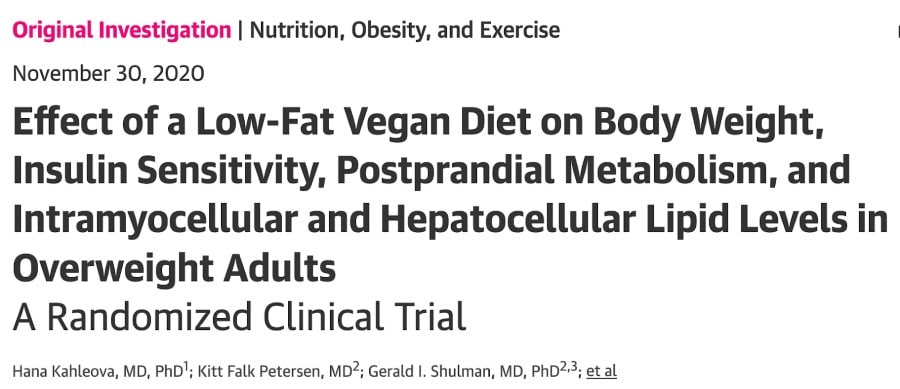
The first study is a randomized controlled trial published in 2020. Randomized controlled trials are the gold standard in research study design because they are the most fair and accurate way to determine whether a certain treatment works. People are randomly assigned to one treatment group or the other, like flipping a coin. In this case, that “treatment” was a low-fat plant-based diet.
So 244 people who were overweight or obese were randomly assigned to the low-fat, plant-based diet or to the control group where no changes were made. The low-fat, plant-based diet was 75% carbohydrate, 15% protein, and 10% fat.

Over the course of 16 weeks, researchers tracked changes in each group for:
And what they found was that the group eating the low-fat plant-based diet lost an average of 14 pounds, they showed improved insulin sensitivity, had almost 19% higher metabolism, and reduced the fat in their liver cells by 34% and muscle cells by 10%.
Let’s break that down to really appreciate what happened:
So this really backs up why we recommend this dietary approach of keeping fat intake low, and whole plant-based foods high.
A healthful plant-based diet is associated with lower type 2 diabetes risk via improved metabolic state and organ function
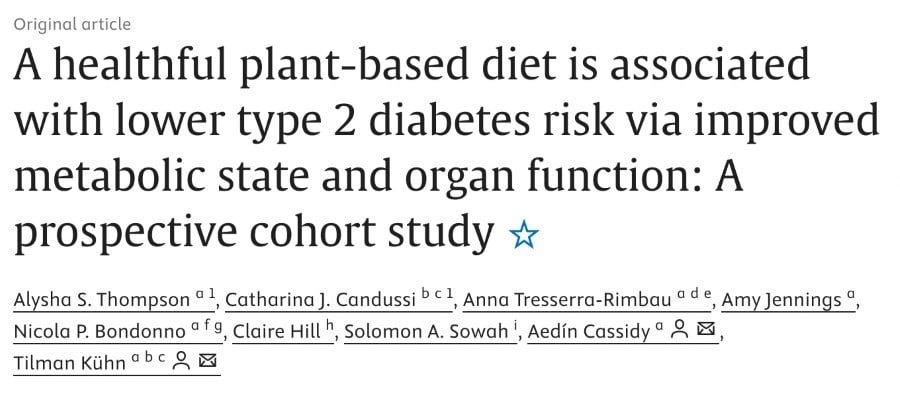
Onto the next study. This one followed over 113,000 people for 12 years. So it’s a longer-term look at how diet affects diabetes. In this case, they weren’t comparing a treatment and control group. They were just looking at how people’s diets affected their risk of developing type 2 diabetes.

What they found was that the people who ate the most whole plant-based foods rather than processed foods and animal foods had a 24% lower risk of type 2 diabetes. Eating this way was also associated with lower BMI, lower levels of inflammation, lower IGF-1 levels, better heart health, and better kidney health. So eating a plant-based whole food diet was a win-win-win-win-win-win situation for the whole body.
This is important because in a lot of studies about diabetes, they will only look at how a diet affects a person’s blood sugar control. But the body is an interconnected ecosystem. When you make a change, it affects everything – so it’s important to look at the big picture, even if diabetes is your focus right now. And if your blood sugar control is steady but you get kidney disease and have a heart attack, then was that diet really healthy? Was it really worth it? Our stance is no. So like I said before, this study shows that a plant-based whole food diet benefits your diabetes, AND your whole body AND your long-term health.
A whole-food, plant-based intensive lifestyle intervention improves glycaemic control and reduces medications in individuals with type 2 diabetes
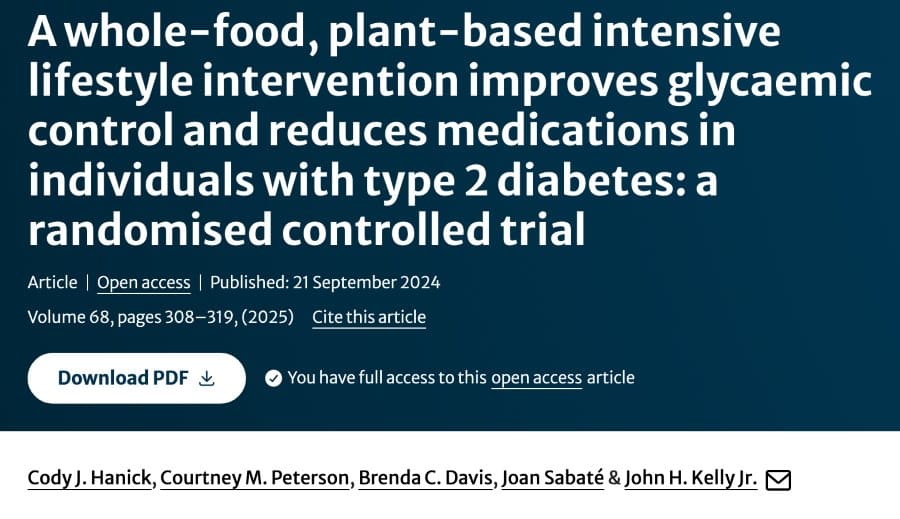
The third study I’m sharing today is another gold standard randomized controlled trial. As of right now it’s the biggest and longest study to ever compare a plant-based whole food diet with a control group (which in this case was standard medical care) for type 2 diabetes. The study had 169 participants and lasted 24 weeks. For the first half of that time, the plant-based group got free meals, exercise sessions, and group classes – and then for the second half of the study they were on their own.
At the end of the 24 weeks:
An important piece of this study is that the results were better after the first 12 weeks. The drop in A1c was bigger during this time, and improvements in insulin sensitivity, cholesterol, and triglycerides were too. For a lot of the people in the study, those results tapered off when they weren’t getting support anymore.

This is why it’s so important to join support groups and hire a coach and put yourself in a situation that holds you accountable. If you follow the Mastering Diabetes Method, there is no way that your health won’t improve, big time. But if you kind of follow the diet, sometimes, but don’t really commit… you might not see much. Changing habits and creating a new lifestyle takes a lot of effort if you do it on your own. So it’s super important to be part of a community of people that help you stay on track and support you in your goals.
Review of current evidence and clinical recommendations on the effects of low-carbohydrate and very-low-carbohydrate (including ketogenic) diets for the management of body weight and other cardiometabolic risk factors
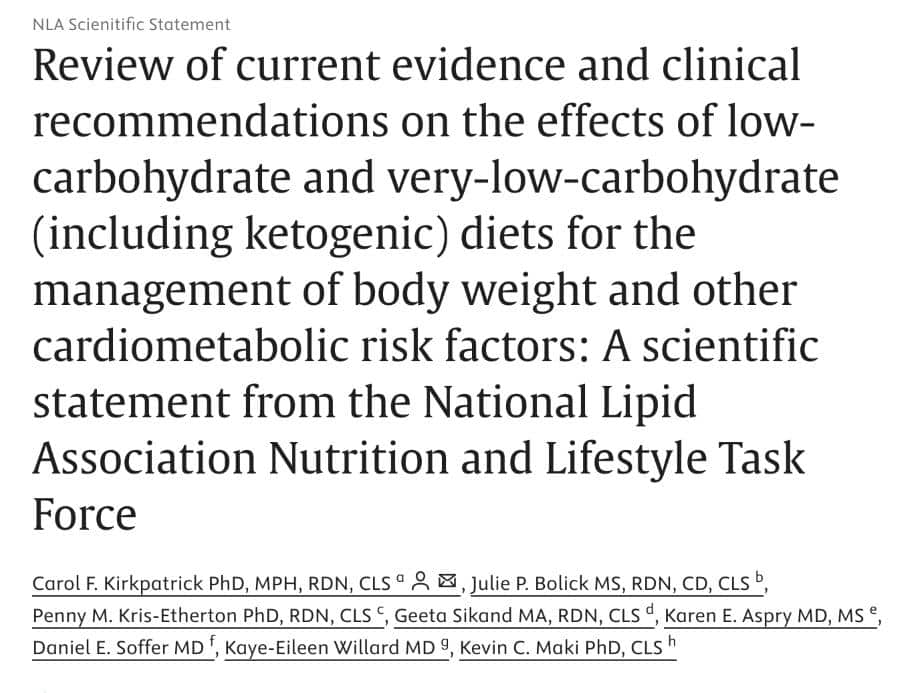
Next I’m going to cover a review paper that summarized all the evidence published on low-carb diets through 2019.
In this study, a low-carbohydrate diet was defined as eating 10-25% of calories from carbohydrates and a very low-carbohydrate diet was defined as eating less than 10% of calories from carbohydrates.
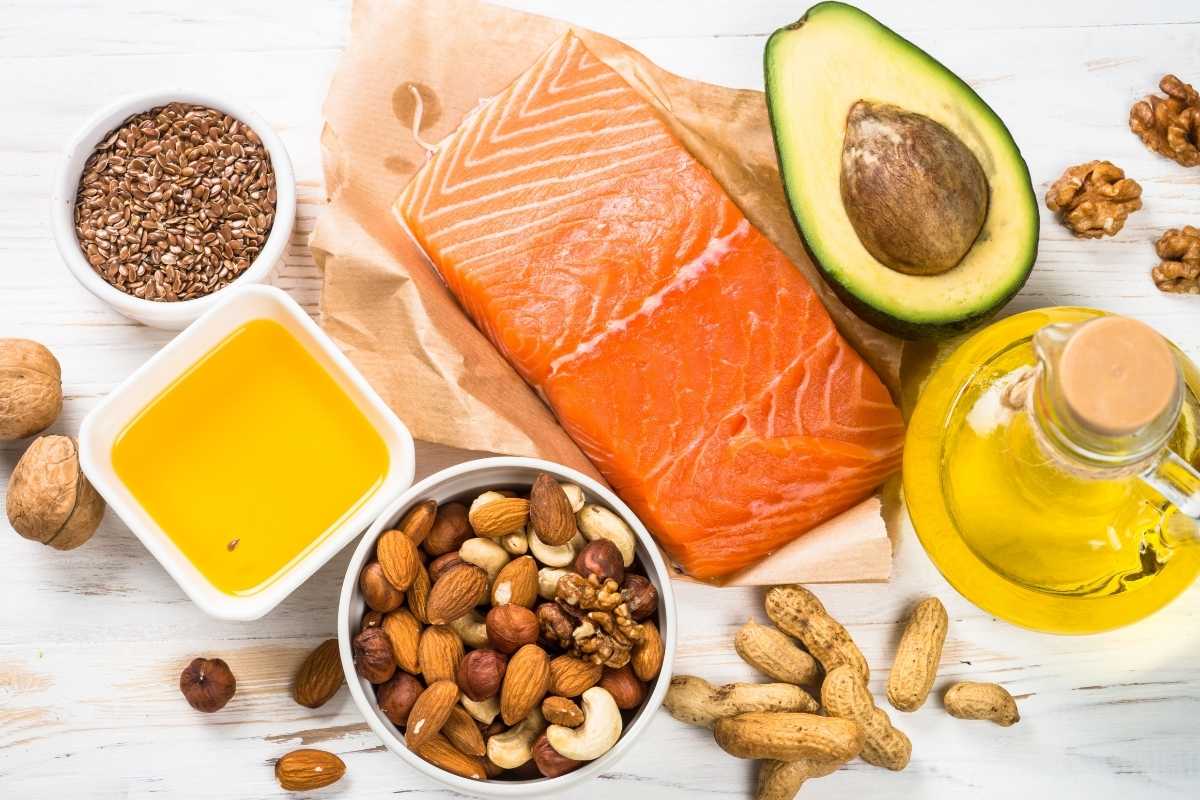
Some of the key conclusions the authors made based on the compiled evidence are:
So basically, a low-carb diet might help you lose weight quickly and lower your blood glucose spikes in the short term. But those results don’t last, and in the meantime you are increasing your risk of heart disease, stroke, and kidney problems, among other things. You can lose just as much weight and have better diabetes health in the long run if you choose a low-fat plant-based whole food diet instead. And you can eat mangos and rice and potatoes!

We’ve had a lot of clients come to us after trying out a low-carb diet. The steady blood sugar lines you see on the CGMs of people eating low-carb are definitely appealing. But it’s a shallow metric and a false sense of security. If you’re eating low-carb, you’re just putting on a bandaid. It doesn’t get to the root cause. In fact, it makes the root cause, which is insulin resistance, worse in the long run.
Association of Animal and Plant Protein Intake With All-Cause and Cause-Specific Mortality in a Japanese Cohort
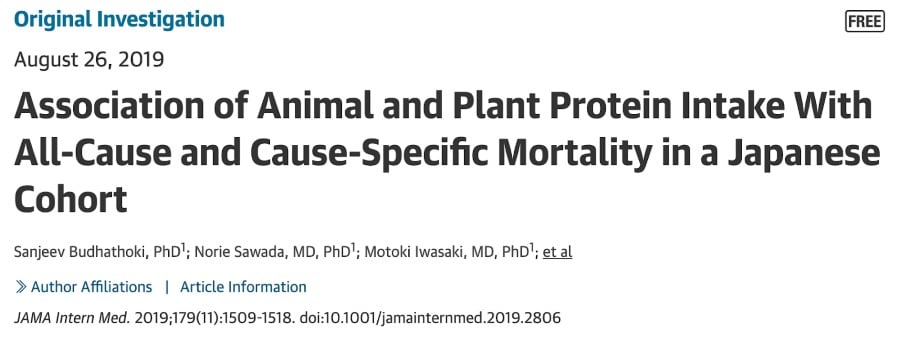
Speaking of which, let’s go to the final study I’m going to share today. This one followed over 70,000 people for an average of 18 years to determine the long-term association between protein intake and mortality (AKA risk of death). The study found that in general, when you eat plant protein instead of animal protein, you live longer. And it doesn’t take much. Swapping in just THREE PERCENT of calories from plant protein in the place of red meat led to a 34% lower total mortality, 39% lower cancer mortality, and 42% lower heart disease-related mortality. And if you did the same swap for processed meat, this led to a 46% lower total mortality and a 50% lower cancer-related mortality.
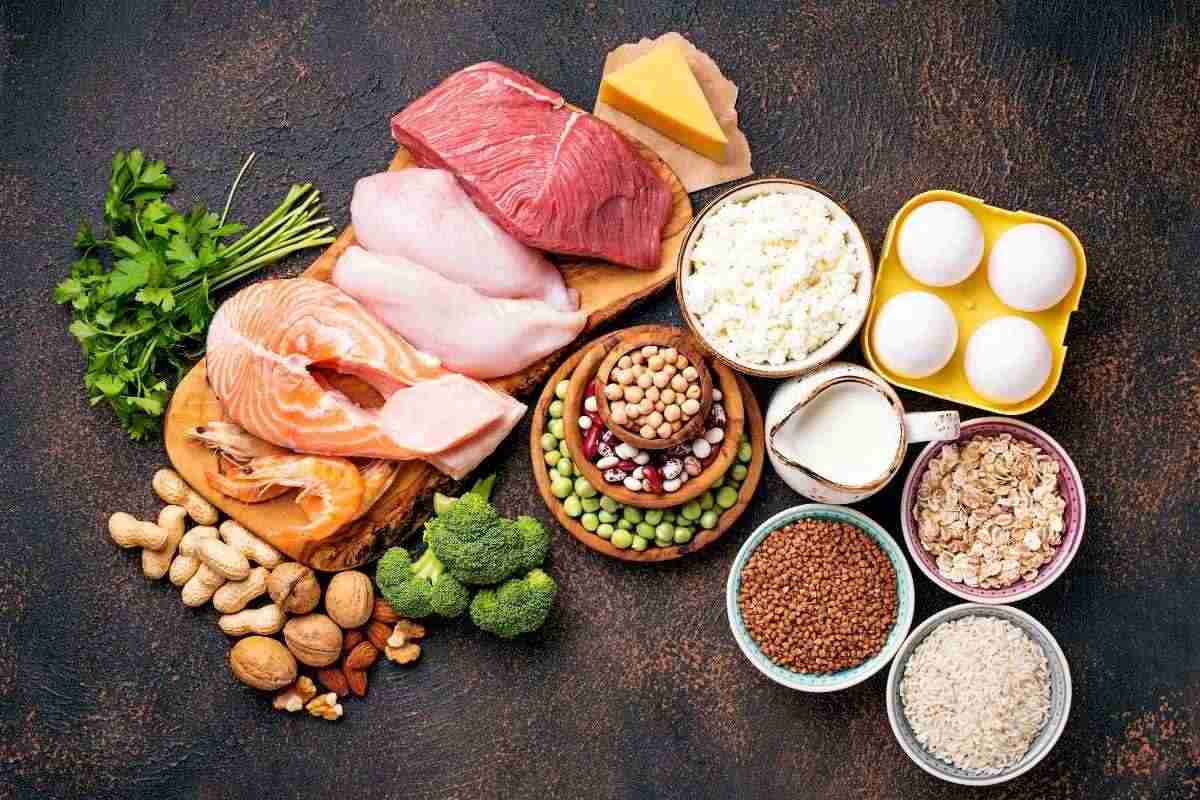
Those numbers are insane, right?! Swapping out 3% of your daily calorie intake from bacon to beans and you lower your risk of dying from cancer by 50%? It almost sounds too impressive to be true, but we have plenty of other studies showing similar results.
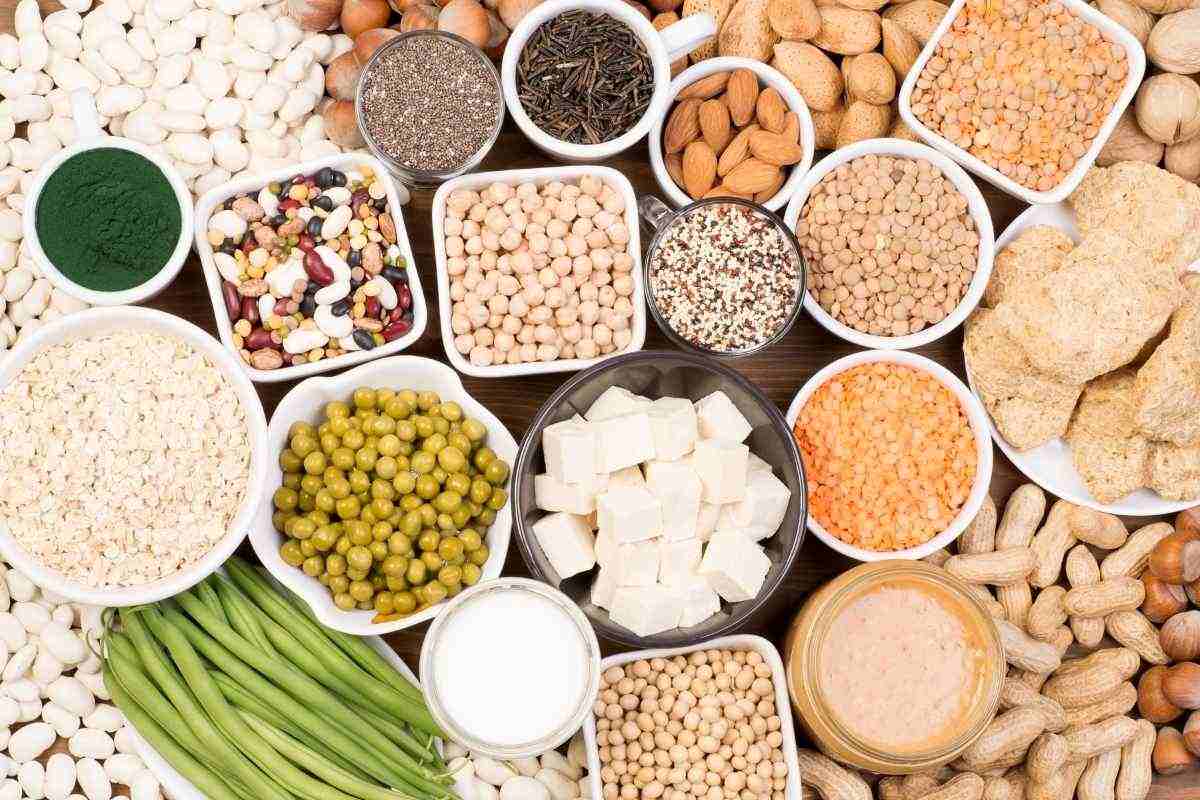
This is yet another reason why we don’t recommend meat in the Mastering Diabetes Method. For any short term results you might get, the evidence just doesn’t support the idea that it’s good for you in the long run. It actually says the opposite.
The Mastering Diabetes Method Recommendations
So, in case you need a refresher, what DO we recommend eating in the Mastering Diabetes Method?
The answer is pretty simple: We recommend low-fat, plant-based, whole foods. As much as you want to eat.
By low-fat, we mean keeping your daily fat intake between 10-15% of calories, with 10g or less per meal.
By plant-based, we mean foods that are plants.
And by whole foods, we mean foods that are in their natural form – how they grow in nature, or as close to it as possible. Not processed and turned into something else.

If you want further clarification, we have an easy-to-read chart that helps you to outline what foods can be considered green light, yellow light, and red light.
These five research studies help to explain why we recommend what we do.
It’s up to you whether you want to follow our recommendations.
If you are questioning how well our method works, just check out our long list of testimonials. You’ll definitely find a story that resonates with yours, and I hope when you do it gives you the faith you need to keep going. I can promise you that this works, and that you can get your health back.
Lower Your A1c and Fasting Blood Sugar... Guaranteed

Your results are guaranteed. Join more than 10,000 ecstatic members today
Personalized coaching puts you in immediate control of your diabetes health, helps you gain energy, improves your quality of life, and reduces or eliminates your meds.