
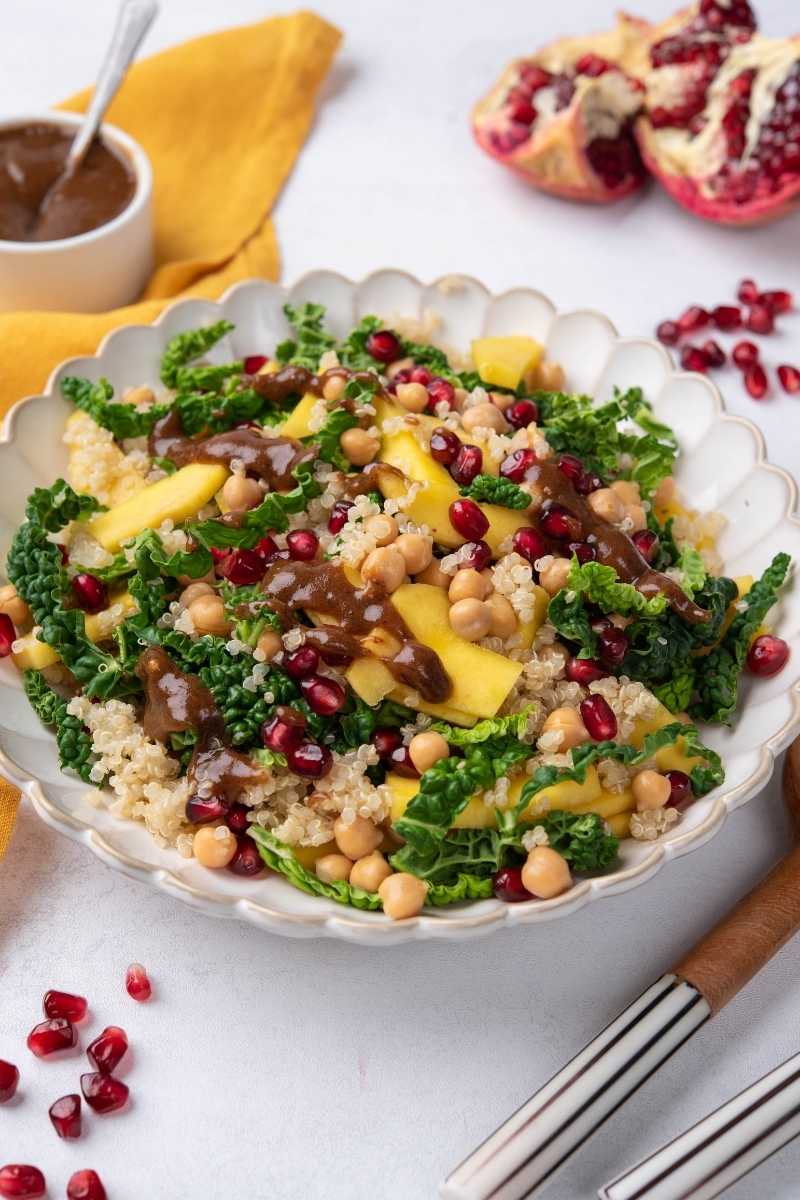
This salad is equal parts fresh and filling. The greens and fruit make it feel light and hydrating, while the quinoa adds a heartiness that makes it feel like a true meal.
Queen Quinoa Deserves a Crown
Quinoa is a fan favorite in healthy cuisine. It’s a pseudo-grain (technically it’s a seed, but it cooks and tastes like a grain) that packs more nutritional punch than other grains. In recipes like this one, quinoa adds a light, fluffy texture and a slightly nutty taste.
Quinoa is uniquely high in protein and also a good source of fiber, vitamins, minerals, and phytochemicals.
Because of these features, eating quinoa is associated with a number of benefits to your health, including lower cholesterol and triglycerides, which help to reduce the risk of heart disease (the #1 cause of death for people living with diabetes). It has also been shown to boost antioxidant defenses, giving you more protection from oxidative stress.
Chickpeas
Join the chickpea club! People who regularly eat chickpeas tend to have better overall diet quality than those who don’t - including higher intakes of fiber, vitamins, magnesium, iron, and potassium.
Chickpeas are ideal to use in recipes where you want to add a richer mouthfeel, as they are creamier than other beans. This is partially because they have a slightly higher fat content – although it is still quite low, and no need to worry about it if you are living with diabetes.
Holy Kale!
Kale is basically synonymous with health these days. Kale is loaded with vitamins, minerals, fiber, and is particularly high in calcium.
Even a small amount of kale improves your glycemic response to a meal. In a 2016 study (a randomized, double-blind, placebo-controlled, crossover study – basically as good as it gets!), consuming kale with a meal lowered blood sugar after the meal, regardless of whether it was a higher or lower dose of kale.
Another study on higher daily kale consumption found that eating kale led to lower A1c, insulin resistance, and body weight.
Suffice to say, while you certainly don’t have to eat kale every day, it’s absolutely worth it to put kale in your regular rotation!
Kale can have a tough texture when raw. To soften it, either pour the cooked quinoa over the kale while warm to slightly wilt the kale leaves, or massage the dressing into the kale leaves with your hands.
Pomegranate
Pomegranate seeds are called arils, and they bring a bright burst of juicy flavor along with a nutty crunch – a delicious combination, especially in a salad like this one.
Pomegranates are packed with powerful antioxidants and anti-inflammatory components that support blood vessel health and metabolic function. Pomegranates have also been shown to support diabetes health. For instance, one study from 2014 looked at the effects of pomegranate juice on blood sugar levels and insulin function in people with diabetes. What they found was impressive – fasting blood sugar levels went down, insulin resistance decreased, and beta cell function improved too. There’s lots to love in this beautiful fruit!
Pomegranate arils can be difficult and messy to separate from the hard outer shell. We recommend looking up a YouTube video to learn the best way to process the fruit to use it in the recipe. You can also often find fresh or frozen pre-seeded pomegranate at most grocery stores these days.
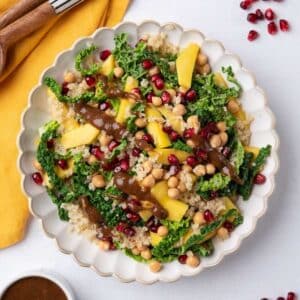
Mango & Chickpea Kale Salad
Ingredients
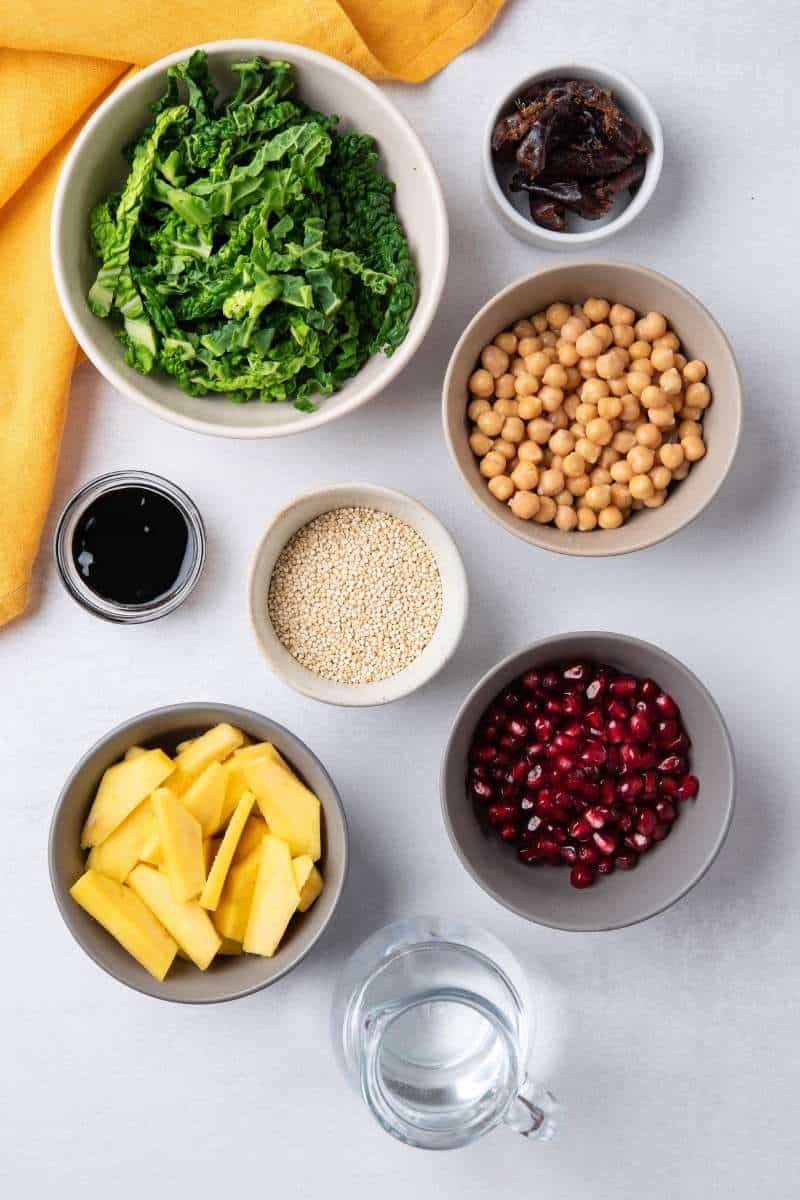
- 2 tbsps (48g) Pitted Dates, soaked in warm water for 10 minutes - About 2 large Medjool dates
- ¼ cup (40g) Quinoa, dry - About 1/10 of a 1-lb bag dry quinoa
- ½ cup (120g) Water
- 1 ½ tsps (8g) Balsamic Vinegar - Available in 16.9 oz bottles
- ⅛ tsp (2g) Black Pepper - Available in spice jars
- ⅓ cup (50g) Chickpeas, canned, drained and rinsed - About ¼ of a 15-oz can, drained and rinsed
- 1 cup (20g) Kale Leaves, finely chopped - About 1 handful, about ⅓ of a standard 5 oz bag
- ½ cup (85g) Pomegranate Seeds - About ½ of a whole pomegranate or ⅓ of a 6-oz container
- ½ cup (80g) Mango, peeled and thinly sliced - About ½ of a medium mango
Instructions
- Soak the dates in warm water.
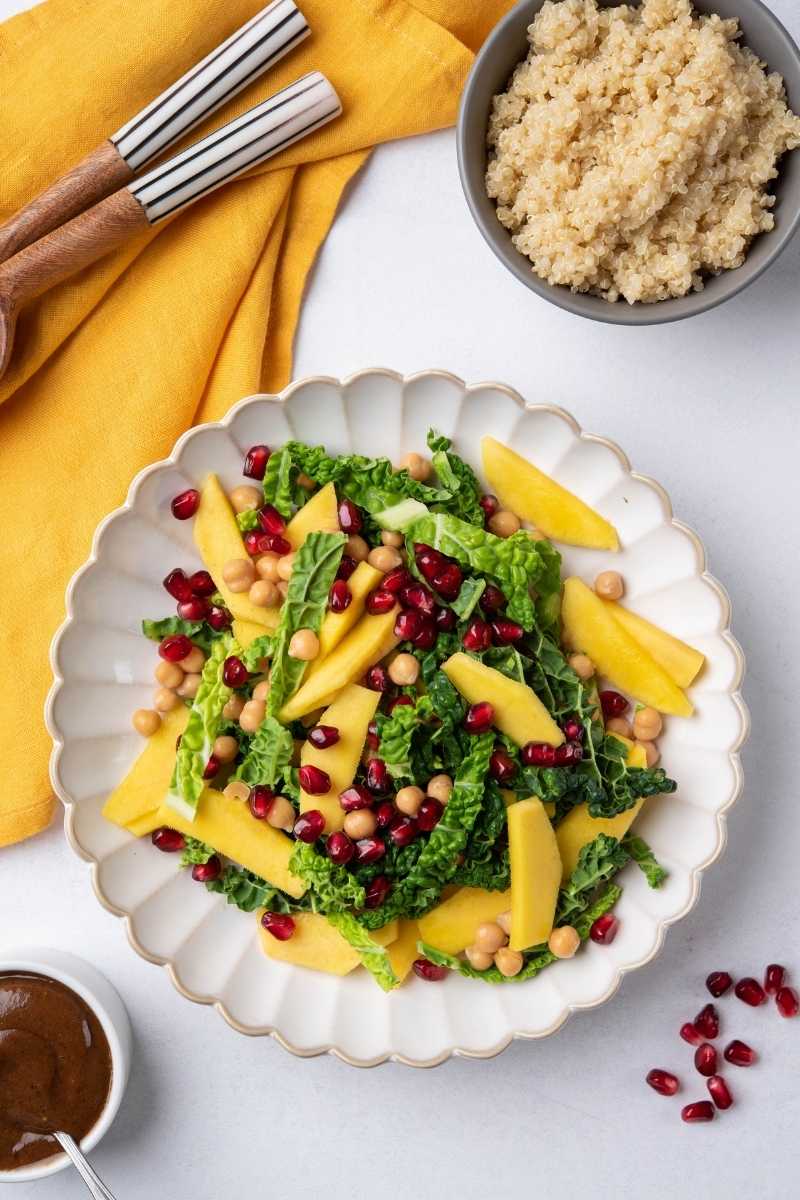
- Place quinoa in a saucepan with water and bring to a boil. Turn down to simmer and cover. Let simmer for 12 minutes. Remove from heat, stir with fork and set aside to cool.
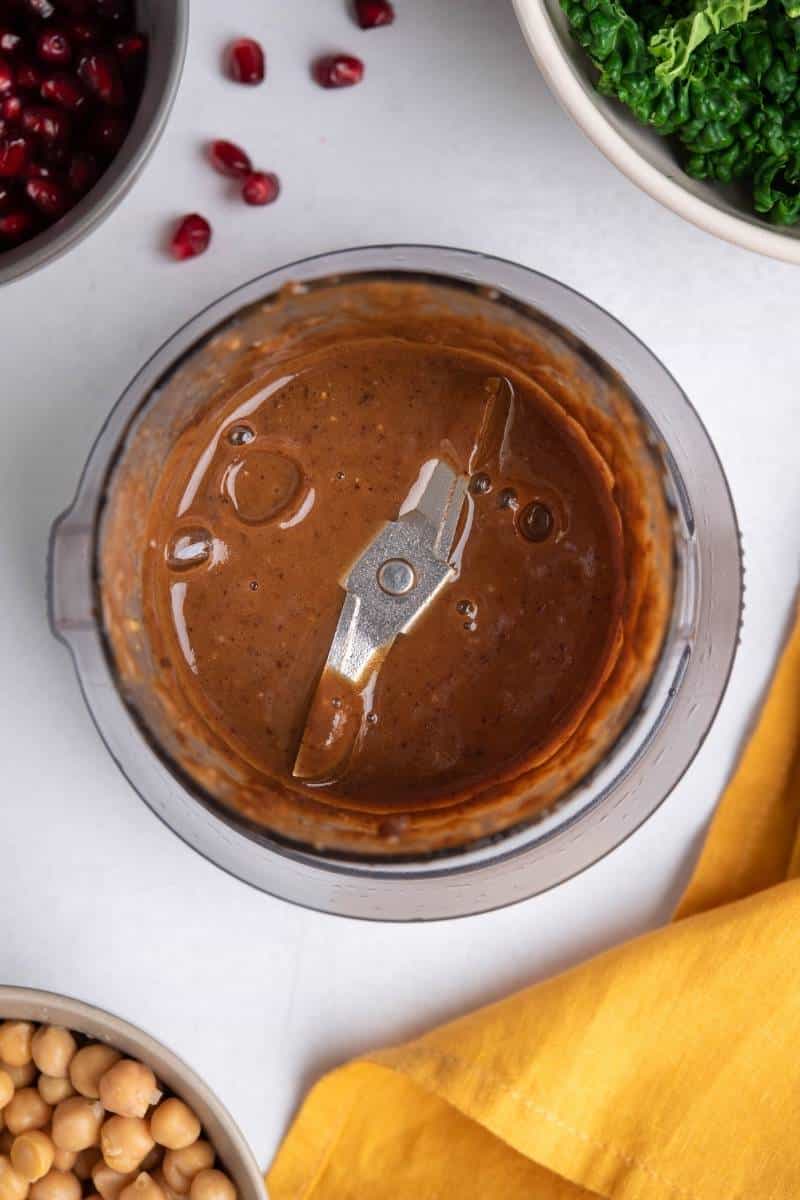
- Meanwhile, prepare the dressing by combining the balsamic vinegar, dates, and black pepper in a blender or food processor and blend until smooth. Add 1 tbsp of warm water at a time to gain your desired consistency.
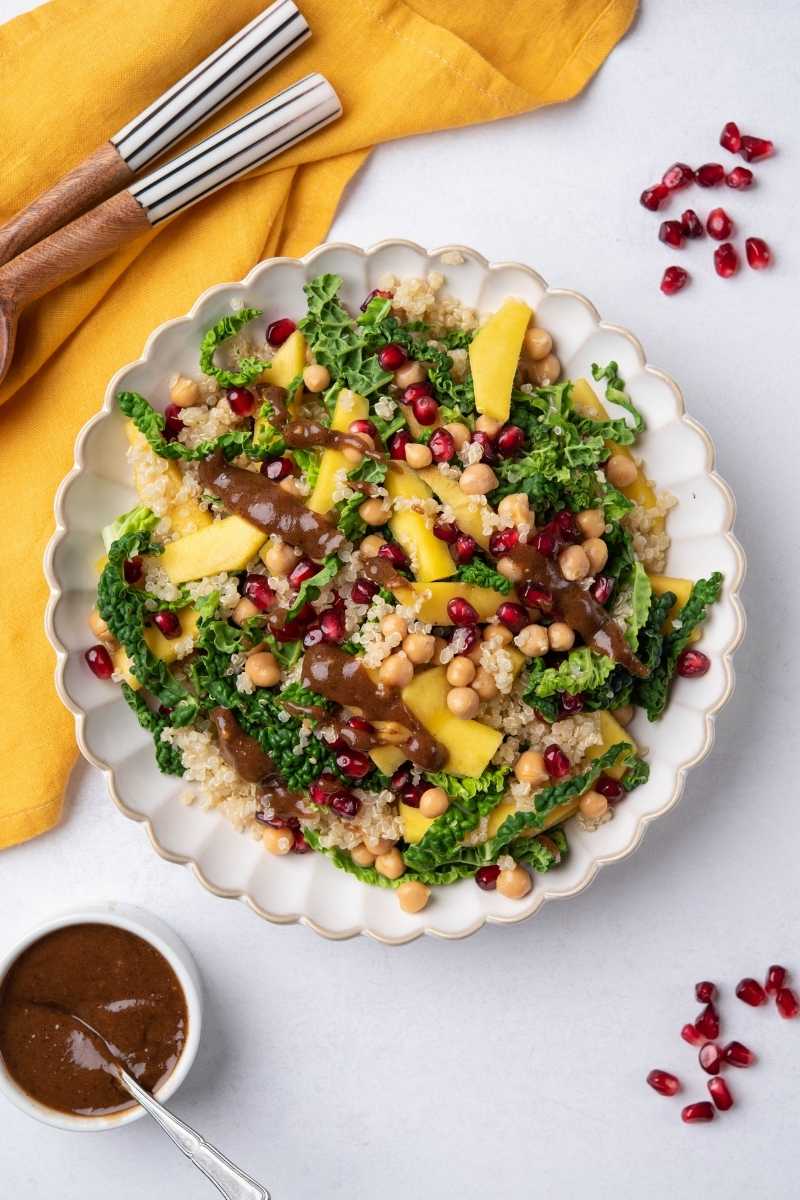
- Combine chickpeas, kale, pomegranate seeds, mango, and balsamic vinaigrette in a large bowl. Add quinoa once cooled.
- Drizzle salad with desired amount of dressing and serve. Enjoy!
Notes
- Quinoa: If you are using pre-cooked quinoa, in order to determine how much to use, simply multiply the uncooked quantity from the ingredient list above by 3. Quinoa triples in size when cooked.
- No Mango: Use peaches, nectarines, or oranges in place of mango for this recipe.
- Leftovers: Store in an airtight container in the fridge up to 3 to 4 days